

Description
🎧 Book one on one Audio Design Theory & Mixing Sessions —
Introduction
Audio production is more than capturing sound — it’s shaping emotion, energy, and experience. Learn Sound System Design & Optimization, mixing concepts for live show, engineering for broadcast. Great sound starts with understanding both the art and the science of audio. My philosophy is simple: sound should move people — not just fill space.
🎼 The Foundation: Audio Design Theory
At its core, audio theory explains how sound behaves and how we perceive it. Important design concepts include:
🔊 Basic Audio Theory – Includes
-
Speaker Systems – Speaker placement, Line Array setups
-
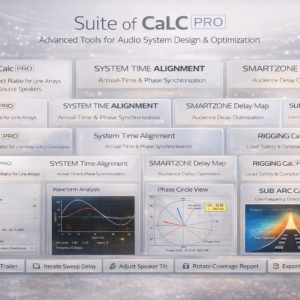
Prediction Software – EASE Jr/FOCUS, BAI CaLC
-
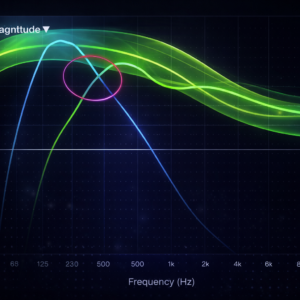
System Optimization – Establish balancing between Sub & Tops, Acoustic crossover and crossover region, Time Alignment, Frequency Correction – all using Smaart Suite
-
General Audio Concepts – foundational information on all things audio
🎚️ Mixing: The Art and Technique
Mixing brings all individual tracks together into a unified, musical whole. It’s where creativity meets control.
📋 Goals of a Great Mix
-
Balance — Every element should be heard without stepping on another.
-
Clarity and Space — Use EQ and panning to give instruments their own place in the spectrum.
-
Emotion — Compression and effects should enhance feeling, not just volume.
🛠️ Key Processes
1. Level Balancing
Start simple — set faders so instruments sit right before effects.
2. EQ (Equalization)
-
Use subtractive EQ to clean up muddiness.
-
Boost only when necessary.
-
Leave room for dominant elements like vocals and bass.
3. Dynamics Processing
Compression controls dynamics without killing feel; use it with intent — not by default.
4. Effects & Ambience
Reverb and delay add depth but can muddy a mix if overdone. Use sends and aux tracks for flexibility.
5. Stereo Imaging & Panning
Place instruments across the stereo field to achieve width and separation while keeping fundamentals (vocals, bass) centered.
Reviews
There are no reviews yet.